


The world of media outreach has gone through a dramatic shake-up since HARO's heyday — and not always for the better. With Connectively (the platform formerly known as HARO) officially shutting down in December 2024, and journalist request volumes across the broader space dropping anywhere from 50% to 64% since 2024, PR professionals and subject matter experts are urgently asking the same question: what now?
The good news is that a new generation of HARO alternatives has stepped up to fill the gap — each with its own take on how to connect experts and journalists in a world where AI has flooded the old marketplaces with low-quality, mass-generated pitches. In this comprehensive guide, we'll explore five leading platforms that are redefining the media pitching space in 2026: Qwoted, Featured, Source of Sources (SoS), MentionMatch (formerly Help A B2B Writer), and Medialyst. We'll take an in-depth look at the unique strengths, features, and value propositions of each option so you can make an informed decision on the best fit for your media outreach needs.
By understanding each option — and the very different bets each one is making on what comes after HARO — you can optimize your media outreach strategy and take advantage of these powerful networking tools.
HARO Alternative 1:
Qwoted
Qwoted has quickly become a favorite among experts seeking to maximize their media outreach efforts, and it's easy to see why. With its unparalleled access to top-tier media opportunities and its intuitive, data-driven tools, Qwoted is the go-to solution for those who are serious about achieving sustained media success.
1. User Experience and Interface
One of Qwoted's standout features is its highly intuitive and user-friendly dashboard, which makes the platform accessible and engaging for PR professionals and subject matter experts alike, regardless of their experience level.
Also, the powerful search functionality of Qwoted's dashboard contributes to an exceptional user experience. The combination of the hashtag filters and the publication-based filters empowers Qwoted users to refine their search effectively, ensuring that they are connecting with the most relevant and high-impact media opportunities. This advanced search capability is a key differentiator for Qwoted, as it helps users save time, optimize their media outreach efforts, and increase the likelihood of securing valuable media coverage.
2. Core Features & Capabilities
Real-Time Pitch Visibility
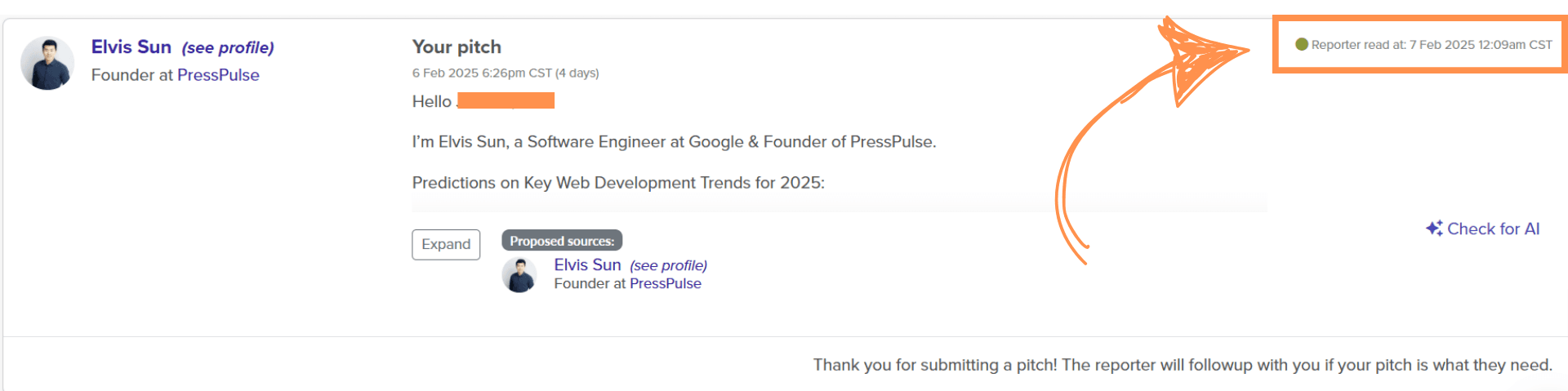
One standout capability is the platform's real-time pitch visibility, which provides users with information on whether their pitch submissions have been viewed or engaged with by journalists. This invaluable insight allows PR professionals to closely monitor the progress of their outreach and make informed decisions about follow-up actions, ensuring their efforts are optimized for maximum impact.
Direct Access to High-Profile Publications
Qwoted's direct connections to industry-leading media outlets are another key advantage. The platform offers users a direct line to prestigious publications like Huffpost, The New York Times, The Wall Street Journal, and Cosmopolitan, enabling them to secure highly coveted media placements that elevate their clients' thought leadership and visibility.
GPTZero Integration for Credibility
Qwoted's integration of GPTZero, a tool that detects AI-generated content, ensures that the experts featured on the platform are authentic and trustworthy. This reinforces Qwoted's commitment to maintaining a high-quality network of sources and further strengthens its position as a trusted partner in media outreach by instilling confidence in the platform's users.
3. Pricing Structure & Value Proposition
While Qwoted's pricing may be higher than some other media sourcing platforms, it's important to consider the comprehensive value it offers users.
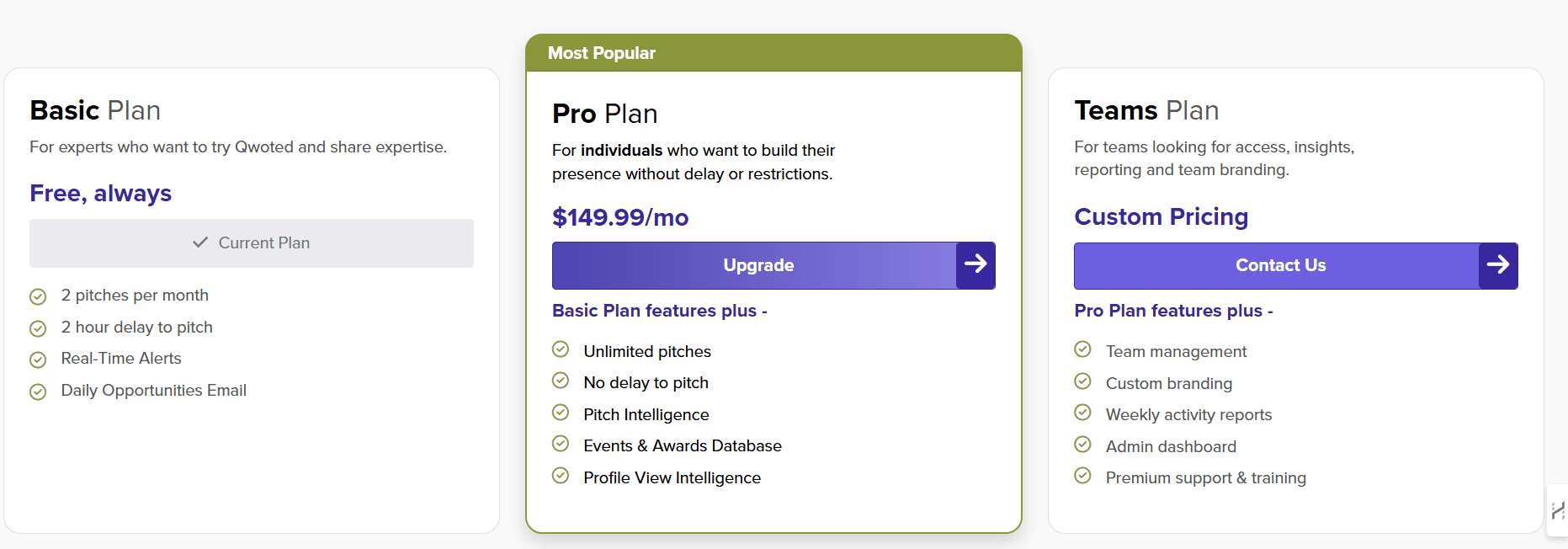
The Basic Plan's free access is a great starting point, but for those seeking to truly maximize their media outreach, the Pro Plan's $149.99/month fee is likely to be a more significant investment.
On the other hand, the pricing for Qwoted's Teams Plan is customized, catering to the unique needs and budgets of larger organizations.
The decision to invest in Qwoted will depend on an individual's or organization's specific media outreach goals, budget, and the value they place on the platform's comprehensive capabilities. While the pricing may be higher than some alternatives, Qwoted's innovative features and its potential to drive impactful results make it a compelling option for those seeking to take their media relations to the next level.
4. Limitations & Areas for Improvement
Email Onboarding
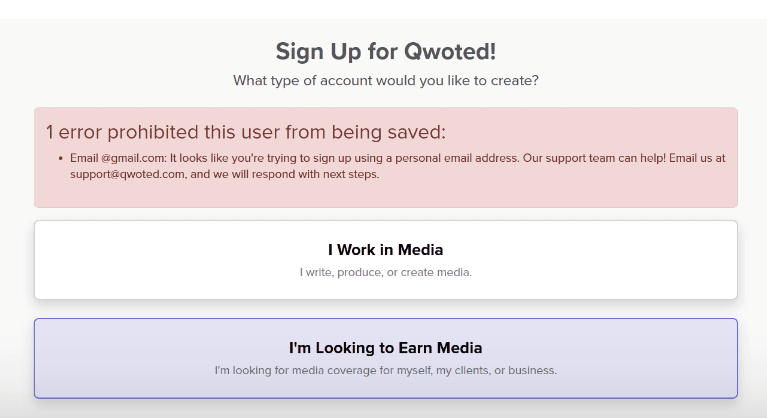
Signing up in Qwoted, you are not allowed to use a personal address. The requirement to use a professional email address and undergo approval by Qwoted's team may create an unnecessary barrier for some users, particularly independent experts or those without a dedicated business email. Streamlining the onboarding process or offering more flexibility in email requirements could make the platform more accessible.
Platform Moderation
Some users have expressed concerns about the platform's moderation processes, indicating that despite the resources invested, there may still be room for improvement in ensuring high-quality content and fair treatment of all users. Reviewing and refining the moderation policies and practices could help build greater trust and confidence in the platform.
Conflict of Interest
The potential conflict of interest arising from Qwoted being paid by PR agencies while also moderating their responses is a valid concern that the platform should address transparently. Implementing clear policies and procedures to mitigate any perceived bias or unfair treatment could help alleviate this issue and reinforce Qwoted's commitment to fairness and integrity.
HARO Alternative 2:
Featured
Featured has firmly established itself as a premier media sourcing platform, much like the well-known HARO service. This is largely due to Featured's ability to efficiently connect thoroughly vetted subject matter experts with reputable publishers seeking authoritative, publication-ready content.
1. User Experience and Interface
Featured’s interface is organized into clear sections, making it easy for users to navigate and understand the purpose of the platform. The categorization of questions into different stages of the review process - "In Review," "Selected," "Published," and "Not Selected" - provides users with a clear understanding of the status of each question. This level of transparency is important, as it allows users to track the progress of their own submitted questions and manage their expectations accordingly.

2. Core Features & Capabilities
Question: The platform allows journalists to submit questions, which is the primary interaction point for experts.
Publication Opportunities: Featured only discloses the media outlet opportunities not the journalists names or email. As an expert, this setup means you can only interact with the publication opportunity through the platform itself.
Deadline and Close Date Management: The platform provides clear deadlines and close dates for when users need to submit their questions, ensuring a structured workflow.
Domain Authority Tracking (for premium users only): The platform tracks the domain authority or credibility of the participants, likely to ensure the experts featured align with the publication's standards.
Actions: The platform offers users the ability to "Answer", "Skip", and "Save" questions, providing flexibility in their engagement with the submission process.
Overall, this platform seems designed to facilitate the identification and curation of expert voices for featured publication opportunities, while maintaining editorial control and structure through deadlines, domain authority tracking, and user actions.
3. Pricing Structure & Value Proposition
Featured's pricing plans offer a compelling solution for professionals and businesses looking to elevate their online presence and content capabilities.
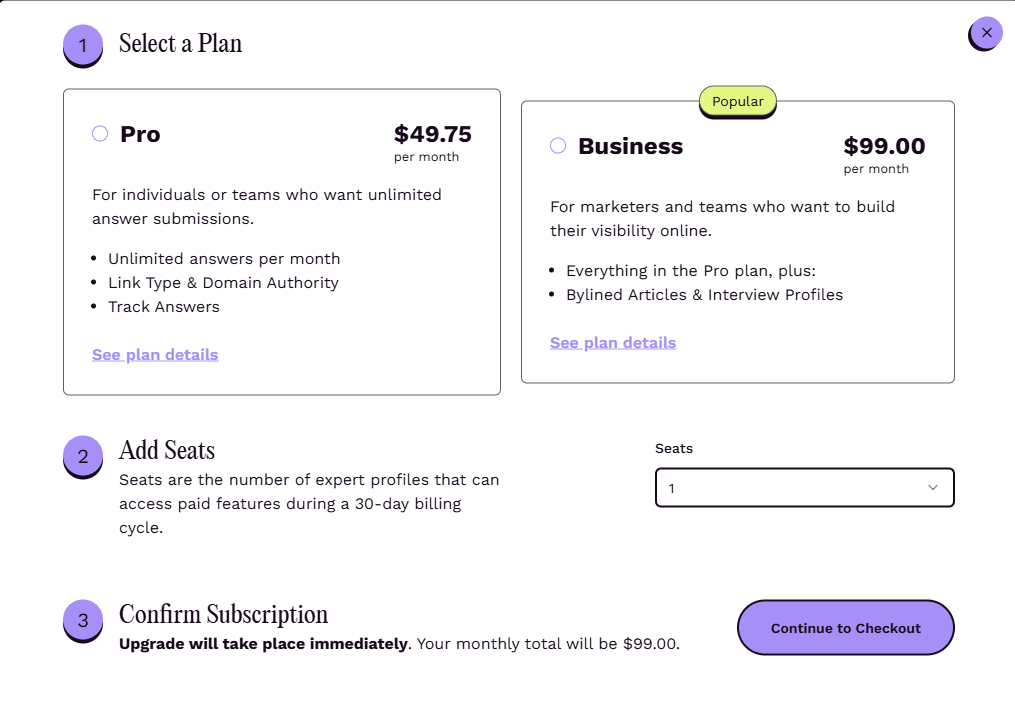
The Pro plan at $49.75 per month is a good value for individuals or small teams that need unlimited answer submissions and related capabilities. The Business plan at $99 per month also appears to provide a solid set of features for marketing teams and professionals looking to build their online presence, with the added benefits of bylined articles and interview profiles.
On the other hand, Featured also offers pitch credits, which allow users to purchase different quantities of credits to unlock various content and engagement features on the platform.
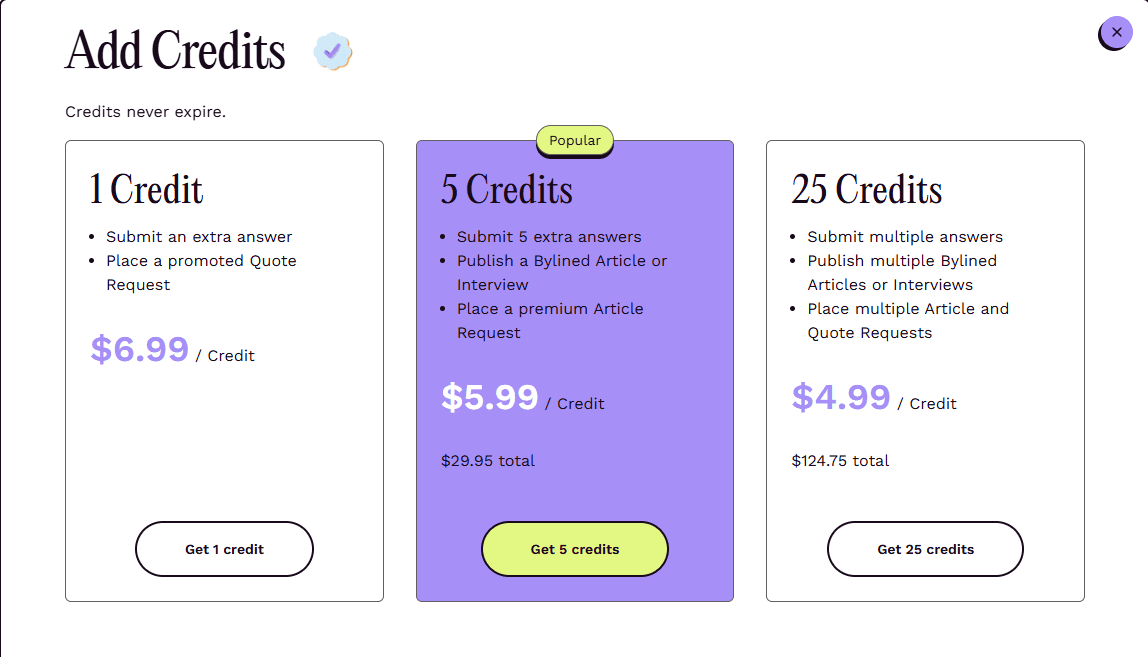
Featured also offers pitch credits, which allow users to purchase different quantities of credits to unlock various content and engagement features on the platform. The tiered credit packages provide scalable flexibility to cater to diverse user needs, cost-effective value for money through volume-based pricing, efficient budgeting with perpetual credit validity, and the ability to strategically deploy advanced content and engagement features as required.
4. Limitations & Areas for Improvement
Potential Misuse of Platform
Concerns have been raised that Featured may allow the proliferation of "link farms" on its platform, where low-quality or even scammy websites are promoted under the guise of legitimate media outlets. This could inadvertently lead users to pitch to these sites unknowingly, potentially damaging their own SEO efforts.
Lack of Content Vetting
Some users also commented that Featured's content publishing features may be exploited, with user-generated content potentially being used to power these dubious link-building schemes. This raises questions about the platform's content curation and quality control processes.
Misalignment of Metrics
Some of the top-ranked media outlets on Featured may have inflated Domain Authority (DR) metrics but low actual traffic. This discrepancy between perceived authority and real-world impact could mislead users into believing they are gaining valuable backlinks when, in fact, the SEO benefits may be minimal or even detrimental.
HARO Alternative 3:
SoS
Founded by renowned media strategist Peter Shankman, SoS streamlines the process of connecting credible sources with reporters in need of authoritative insights and perspectives.
1. User Experience and Interface
Using Source of Sources (SoS) is a breeze, especially if you're already familiar with HARO. The platform has a wonderfully straightforward interface that lets you quickly navigate and access all the available opportunities. Compared to some of the more complex media outreach tools out there, SoS is refreshingly uncomplicated - perfect for those of us who are used to the HARO way of doing things.
2. Core Features & Capabilities
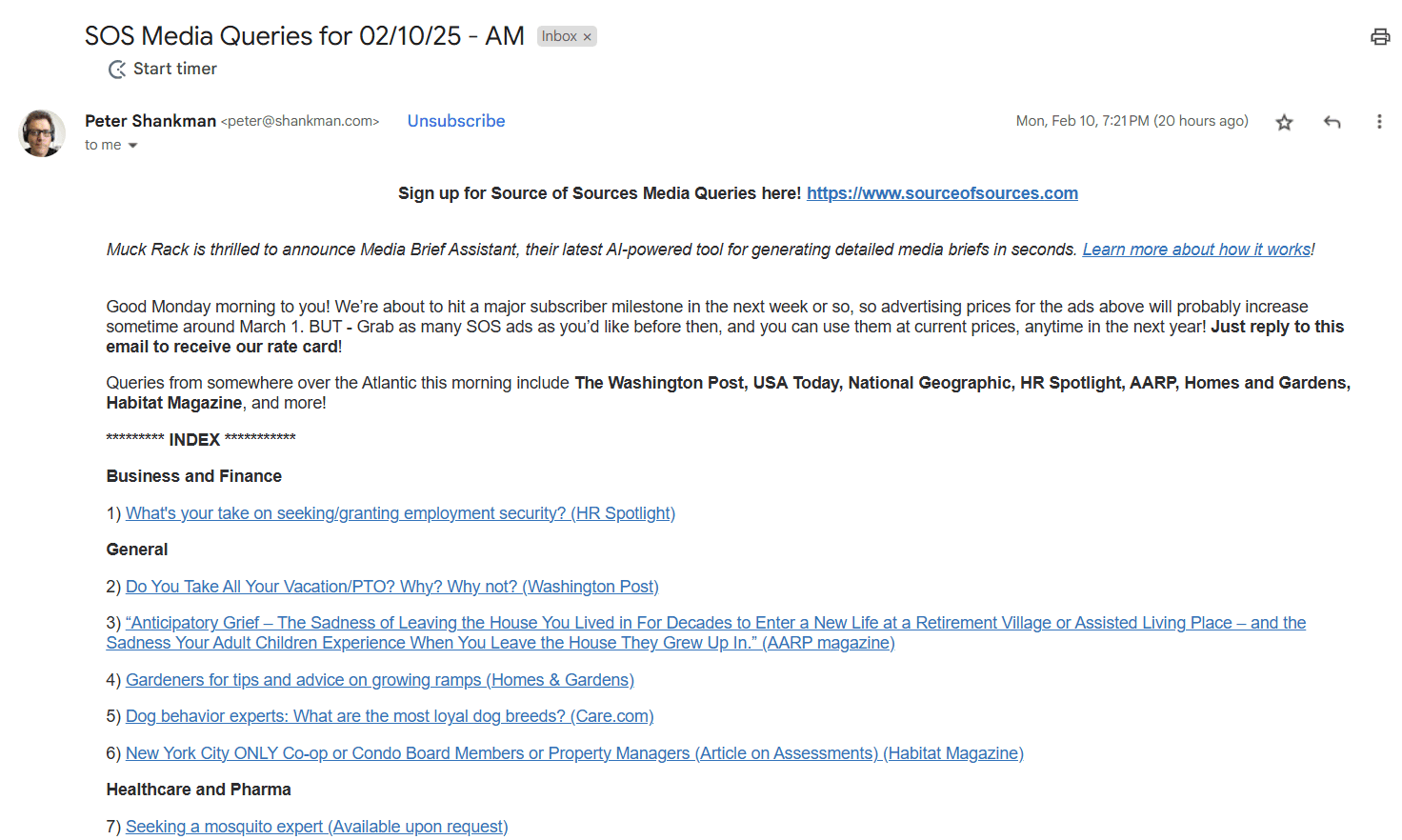
At its core, SoS is built around a simple yet effective email-based system. Every day, you'll get 1-3 emails with journalist requests that you can choose to respond to based on your relevance and availability. One of the standout features is the ability to connect directly with journalists. Sure, it may lack some of the advanced functionality like filtering or profile management, but the core purpose of facilitating media connections is definitely well-served.
What really sets SoS apart is its spiritual continuity with the original HARO network. This connection gives you access to a ton of journalists, which in turn boosts your chances of scoring those all-important media placements. And let's not forget the simplicity factor - the platform is so easy to use, it's a breath of fresh air compared to some of the more complicated tools out there.
3. Pricing Structure & Value Proposition
The best part about SoS? It's completely free! You can access all the platform's services without having to shell out a single penny, making it a super attractive option for businesses and individuals looking to score some media exposure. The downside is that this free-for-all approach tends to attract a bit more spam, which can be a pain for journalists using the platform.
4. Limitations & Areas for Improvement
Now, I've got to be honest - SoS isn't perfect. The free-for-all nature of the platform does mean it attracts a fair bit of spam, which can be a real headache for the journalists using it. Also, while the streamlined interface is appealing, the absence of customization options or detailed metrics can make it difficult to track and optimize your outreach efforts over time. For users seeking more robust analytics and reporting capabilities, SoS may fall short of their needs.
HARO Alternative 4:
MentionMatch (formerly Help A B2B Writer)
MentionMatch has carved out a unique and increasingly valuable niche in the post-HARO landscape, and it's a name worth knowing — especially if you're operating in the B2B space. Originally launched as Help A B2B Writer and acquired by Superpath in 2022, the platform rebranded to MentionMatch to better reflect its evolving mission: connecting B2B writers with expert sources who can provide the quotes, anecdotes, and data that bring content to life.
Where many HARO alternatives try to be everything to everyone, MentionMatch has done the opposite — leaning hard into a specific, well-defined audience. The result is a tighter, higher-signal platform that consistently delivers relevant opportunities to the experts who participate.
1. User Experience and Interface
MentionMatch's interface is refreshingly simple and built around a clear three-step flow: writers submit their requests with specific expertise needs, matching sources receive personalized email notifications, and quotes flow back through the platform to power high-quality content. The streamlined design makes the platform genuinely easy to use, whether you're a busy expert fielding requests or a writer hunting for the perfect quote.
What stands out is how granular the expertise tagging is. Rather than the broad categories that plague older HARO-style platforms, MentionMatch lets sources select very specific areas of B2B expertise — meaning the requests that land in your inbox are actually relevant to what you know.
2. Core Features & Capabilities
Tight B2B Focus. The platform is laser-focused on B2B SaaS, marketing operations, sales, and adjacent verticals — which keeps both the writer pool and the source pool high quality. You won't see generic lifestyle queries here.
Expertise-Based Matching. Sources select tagged areas of expertise during signup and only receive requests that match those tags. This keeps inbox volume manageable and relevance high.
Superpath-Backed Writer Network. Because writers come primarily from the well-regarded Superpath content-marketing community, the quality of requests stays meaningfully higher than open marketplaces — a real differentiator post-HARO.
Email-First Workflow. MentionMatch delivers matched requests straight to your inbox via email, preserving the familiar HARO-style flow that many experts already know and love.
3. Pricing Structure & Value Proposition
One of MentionMatch's most compelling features is its accessibility — the platform is completely free for both expert sources and B2B writers, supported by the broader Superpath ecosystem rather than direct user fees. This makes MentionMatch one of the most cost-effective HARO alternatives available, particularly for independent consultants, fractional executives, and bootstrapped B2B founders who want quality media opportunities without a monthly subscription.
The value proposition is straightforward: targeted, high-quality B2B opportunities, zero financial barrier to entry, and a community-driven model that has kept quality high while many paid platforms have struggled.
4. Limitations & Areas for Improvement
Narrow Vertical. MentionMatch's biggest strength is also its biggest constraint — if you're not in B2B, you'll find very few relevant requests. Consumer brands, lifestyle experts, healthcare practitioners, and general thought leaders will get more mileage from other platforms on this list.
Lower Total Volume. The intentional focus on B2B and community-driven supply means fewer absolute requests per week compared to HARO at its 2022–2023 peak. Quality is higher, but volume-driven outreach strategies will need a complementary channel.
Limited Publication-Tier Visibility. Requests don't always make clear where the resulting content will be published, which can make it harder to prioritize by SEO impact, domain authority, or brand-recognition value. A small but meaningful gap for experts who care about placement quality.
HARO Alternative 5:
Medialyst
Medialyst takes the boldest swing of any platform on this list — instead of trying to fix the HARO model, it skips the journalist-query marketplace entirely. The bet is straightforward: in a world where AI has commoditized the reactive pitch, the way to win is to find journalists before they ever post a query. Medialyst's AI does exactly that, surfacing relevant journalists based on what they're currently covering, what they're likely to cover next, and how your expertise or story fits their beat.
For PR teams that have grown tired of refreshing inboxes and competing against 200 AI-generated responses to the same query, Medialyst represents a genuinely different way of working — proactive, intelligence-driven, and built for the post-HARO era from the ground up.
1. User Experience and Interface
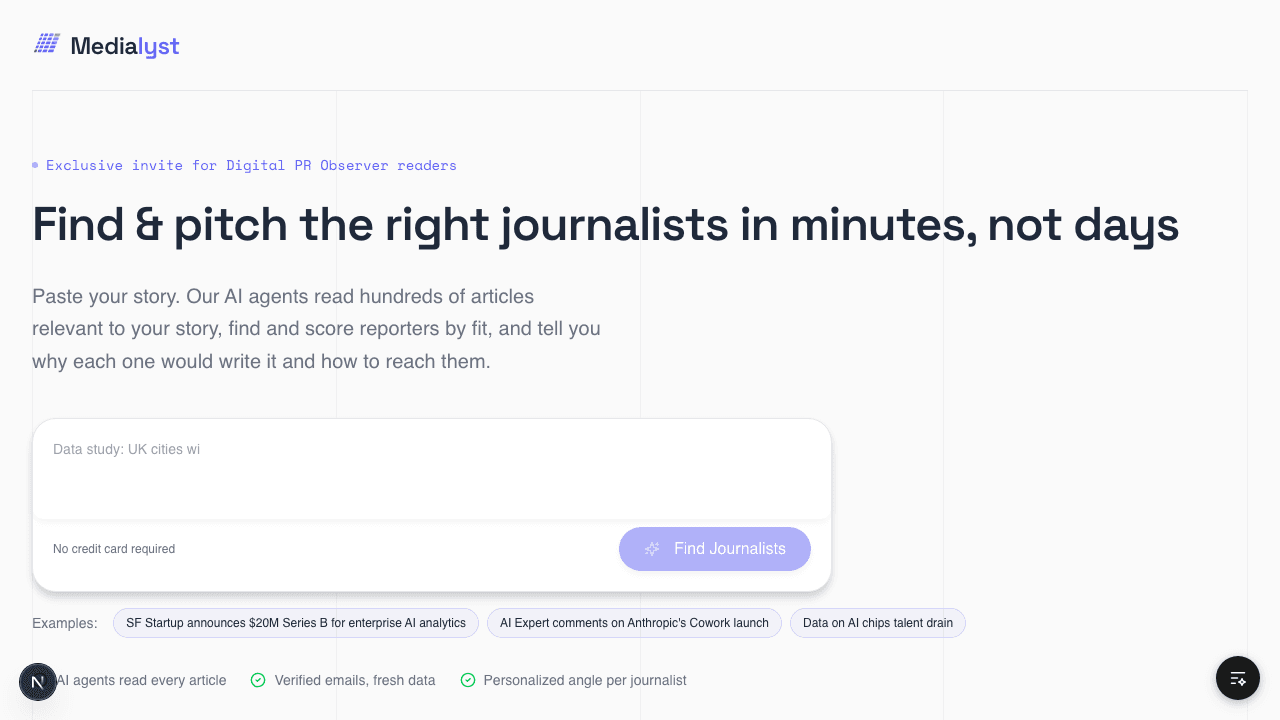
The Medialyst dashboard is organized around journalists and breaking stories rather than queries. Users set up topic monitors for the beats they care about, and Medialyst's AI surfaces relevant journalists in real time — complete with context on what they've recently written, the publications they cover, and tailored angles for outreach. The interface is clean, fast, and designed for the way modern PR teams actually work.
What makes the experience particularly effective is how seamlessly it bridges research and action. You're not just discovering journalists — you're getting the context and AI-assisted pitch drafts to reach out the same day, which compresses what used to be a week of media-list-building into an afternoon.
2. Core Features & Capabilities
Proactive Journalist Discovery. Medialyst's AI matches your topics, company, or story to journalists actively covering adjacent beats, surfacing them with contact info and pitch context — no waiting for a query that may never come.
Real-Time Newsjacking Signals. The platform monitors news as it breaks and instantly suggests journalists covering each angle, letting you pitch into a live story rather than compete in a crowded HARO inbox.
AI Pitch Intelligence. Medialyst drafts pitches tailored to each journalist's recent work, then lets you edit and personalize — designed for quality of outreach, not mass volume.
Developer and Agent Integrations. MCP and API access mean Medialyst can plug directly into agent workflows (Claude Desktop, Cursor, and custom automations) — a meaningful advantage for teams building automated or semi-automated PR operations.
No Spam Marketplace by Design. Because there's no open query board, there's no race-to-the-bottom dynamic. The signal-to-noise ratio is structurally better than any HARO-style platform can ever achieve.
3. Pricing Structure & Value Proposition
Medialyst offers a tiered subscription model: a Starter plan at $149/month, a Pro plan at $299/month, and a Scale plan at $800/month for larger PR teams and agencies. The pricing sits comparable to Qwoted's Pro tier in absolute terms, but the value proposition is fundamentally different — you're paying for ongoing journalist intelligence and outreach infrastructure, not access to a query feed.
For solo founders, in-house PR leads, and consultants who run multiple proactive campaigns per quarter, the math typically lands in Medialyst's favor — one well-placed feature story can easily cover a year of subscription cost. For teams still anchored in reactive query-response workflows, the pricing requires a real workflow change to justify.
4. Limitations & Areas for Improvement
Different Workflow. If your team is fully built around the HARO model — wait for queries, respond quickly — Medialyst's proactive approach requires real retraining. The tool is excellent, but it asks you to change how you work.
Effort Still Required. Proactive outreach means crafting tailored, journalist-specific pitches. The AI helps significantly, but it doesn't eliminate the work the way a 200-pitch HARO blast pretends to. This is a feature, not a bug — but worth being clear-eyed about.
Newer Category. AI-driven proactive outreach is a fast-moving space, and any tool in this category — Medialyst included — will see rapid feature changes and occasional rough edges. Early adopters get more value but should expect a more iterative product experience than a mature HARO-replacement marketplace.
HARO Alternative Conclusion Review
When it comes to media outreach in 2026, there's no shortage of options to consider — but the landscape has changed in ways that demand more careful thought than ever. This guide has taken a deep dive into five of the top platforms — Qwoted, Featured, SoS, MentionMatch, and Medialyst — to help you understand the unique pros and cons of each one in a post-HARO world.
Each platform represents a different bet on what comes next. Qwoted and Featured are doubling down on quality control to keep the journalist-query model alive. SoS is preserving the spirit of the original HARO with a lighter-touch, free-for-experts approach. MentionMatch has specialized aggressively into B2B, where its community-driven model continues to thrive. And Medialyst is making the boldest bet of all — that the marketplace model itself is the problem, and the future of media outreach is proactive, AI-powered, and journalist-first.
Ultimately, it's about taking the time to explore these options, weigh the tradeoffs, and then select the platform (or combination of platforms) that's going to give you the best shot at securing those valuable media placements. For many teams, the answer won't be a single tool — it will be a paid seat on Qwoted or Featured for opportunistic responses, a proactive tool like Medialyst for meaningful campaigns, and MentionMatch on the side if you're in B2B. Because let's be real — boosting your brand visibility and positioning yourself as a thought leader in your industry doesn't happen by accident. You've gotta work smarter, not just harder.
So dive in, do your research, and figure out which of these HARO alternatives is going to be your secret weapon for media outreach in 2026 and beyond. Your PR and marketing efforts will thank you for it.
Updated June 2026 to reflect the post-Connectively landscape, add MentionMatch (formerly Help A B2B Writer), and re-evaluate each platform's current standing.